Scientists have developed a new method to create advanced magnetic materials using boron nitride ceramic crucibles. These crucibles are key in the flux synthesis process for making nitride-based magnets. The team found that boron nitride offers high thermal stability and does not react with the molten flux or the growing crystals. This helps produce pure, high-quality magnetic compounds without contamination.
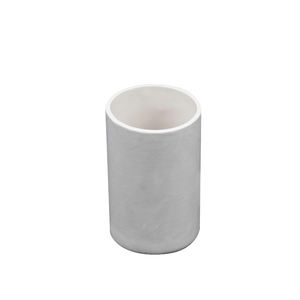
(Boron Nitride Ceramic Crucibles for Flux Synthesis of Nitride Based Magnetic Materials)
Traditional crucibles often break down at high temperatures or introduce impurities. Boron nitride avoids these problems. It stays strong even when heated above 1,500 degrees Celsius. Its non-wetting surface also stops the molten material from sticking, which makes it easier to remove the final product.
Researchers tested several nitride systems, including rare-earth transition metal nitrides. They used alkali or alkaline earth metals as flux agents. In every case, the boron nitride crucibles delivered consistent results. Crystal growth was uniform, and the magnetic properties matched theoretical predictions closely.
The success of this approach opens doors for faster development of new magnetic materials. Such materials are important for electric vehicles, wind turbines, and data storage devices. Using boron nitride crucibles cuts down on failed experiments and saves time in the lab. It also reduces the need for repeated purification steps.
(Boron Nitride Ceramic Crucibles for Flux Synthesis of Nitride Based Magnetic Materials)
Manufacturers of specialty ceramics are now scaling up production of these crucibles. Labs around the world are adopting them for high-temperature crystal growth. The method is simple, reliable, and fits into existing workflows without major changes. This practical solution addresses a long-standing challenge in solid-state chemistry and materials science.